 23 Dec,2025
 YUANTING Technology
In the realm of ultra-low temperature logistics, the widespread use of dry ice as a refrigerant is often taken as a given solution. Yet, when we expand our view to encompass the entire operational chain, it becomes clear that this conventional approach carries a dual challenge: operational costs and environmental impact.
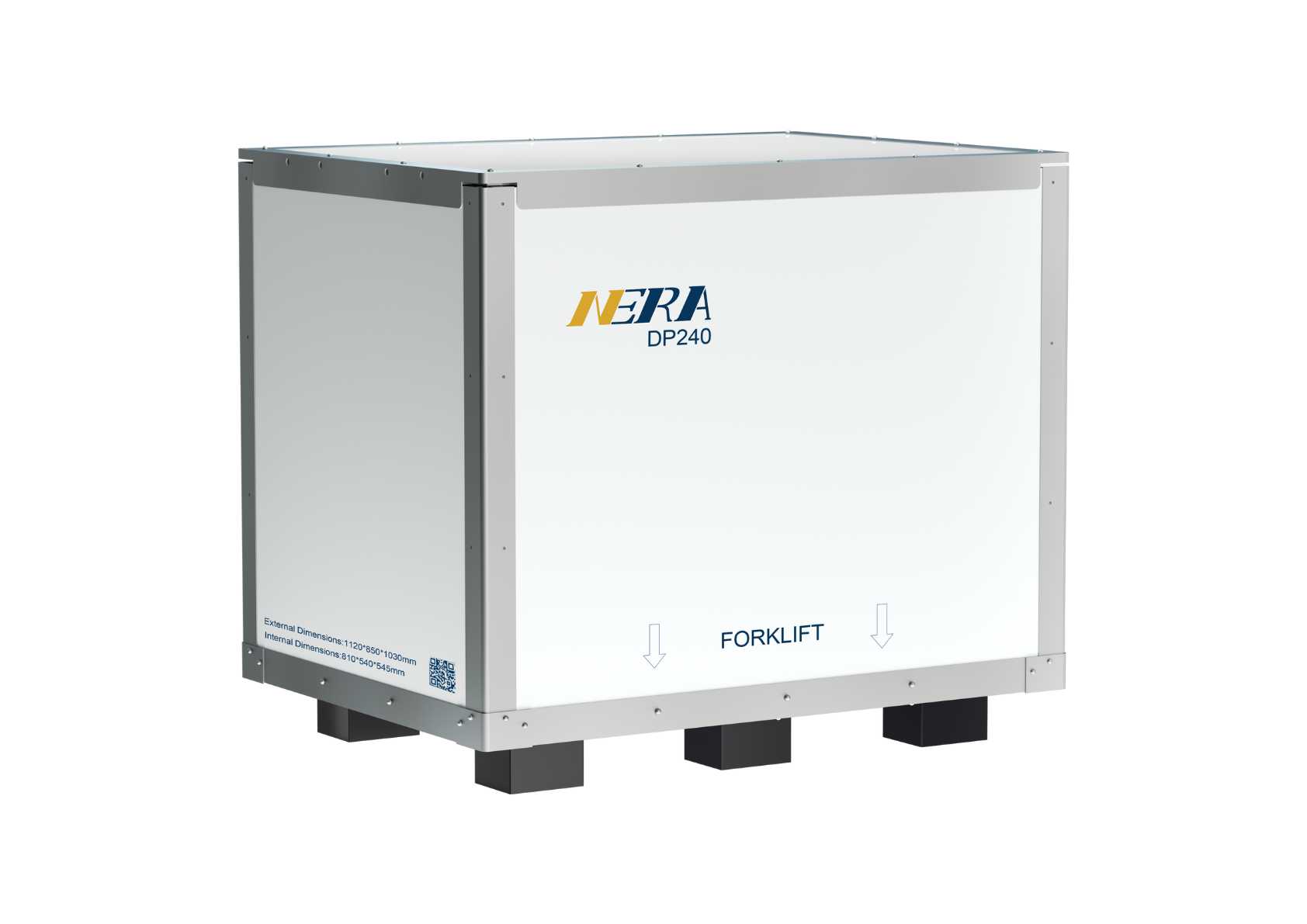
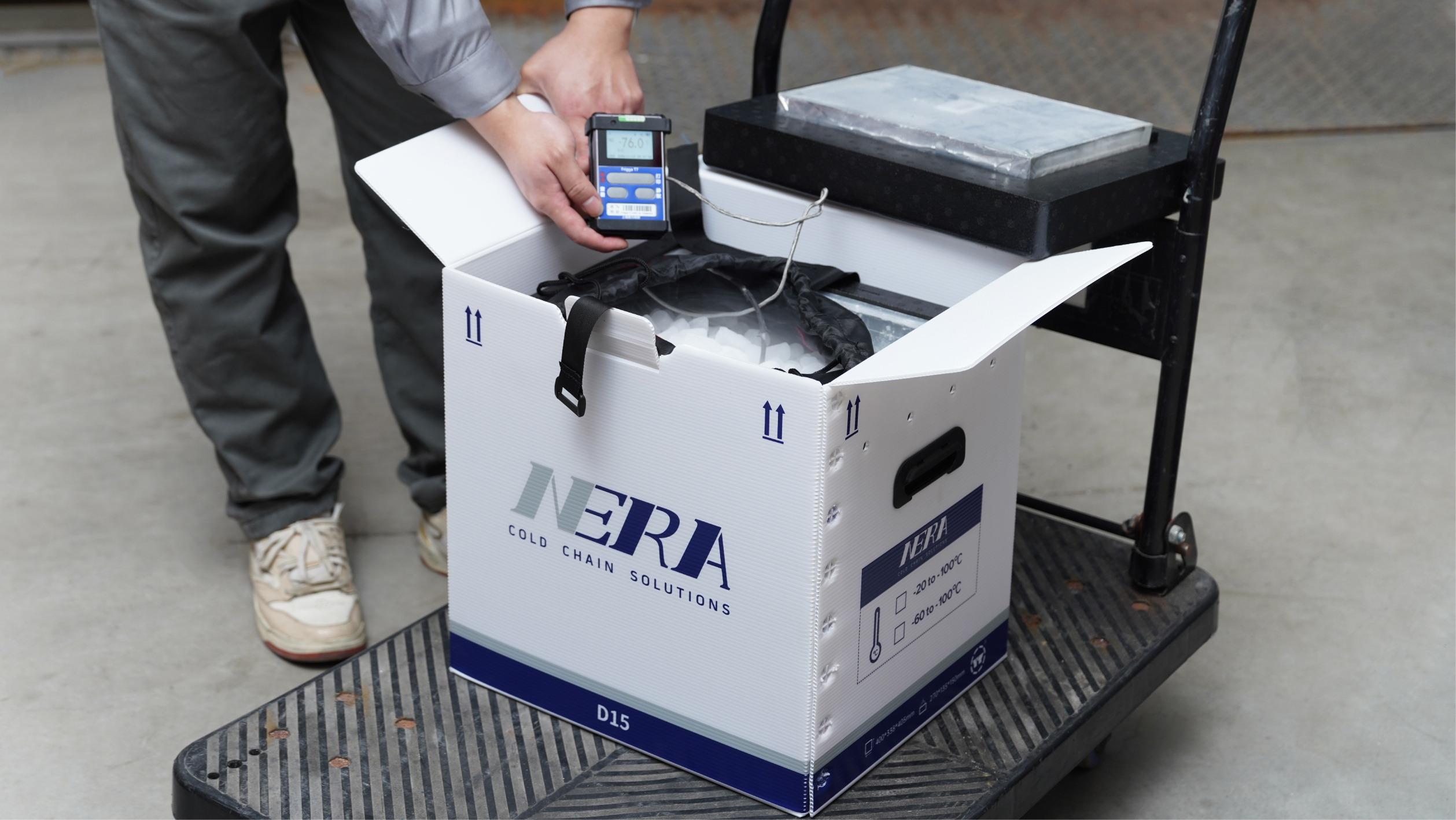
Dry ice consumption is directly linked to two factors: the visible expense of procurement and replenishment, and the environmental considerations. The NERA D Series dry ice shipper was developed to address this dual challenge. Through engineering optimization, it brings together efficiency and sustainability as complementary objectives. It is designed not only as a thermal packaging solution, but also as a tool for managing cost and carbon footprint.
Traditional dry ice shipper design often revolves around "maximizing payload space" or "ensuring a baseline hold time." The starting point for the NERA D Series is different: to achieve an efficient ratio between dry ice consumption and usable payload space for a given transport duration.
The realization of this approach relies on three structural features:
1. Insulation Performance: The Role of VIP Technology
Moving away from the material approach of traditional EPS (Expanded Polystyrene) foam boxes, the D Series incorporates high-performance Vacuum Insulation Panels at its core. With low thermal conductivity, VIPs provide effective thermal insulation while maintaining a controlled wall thickness. This means that to maintain the same internal low-temperature environment, the rate of external heat ingress is reduced, helping to lower reliance on continuous dry ice sublimation to compensate for cooling demand. This is a basis for dry ice reduction.
2. Structural Sealing to Reduce Sublimation
Dry ice loss is not only about compensating for heat leakage; structural design can also affect sublimation during static storage. The D Series uses enhanced sealing integrity and thermal break construction to help reduce dry ice loss caused by air convection. Reduced sublimation can contribute to longer effective hold time and more stable internal temperature during transit.
3. Anti-Condensation and Durability Design
In ultra-low temperature environments, condensation may form on the exterior, which could affect the structure, lifespan, and microbial considerations. Through material selection and surface treatment, the D Series is designed to help reduce condensation, supporting long-term reliability over multiple use cycles and contributing to lower total cost of ownership.
Theoretical advantages can translate into measurable benefits on the client's balance sheet. The NERA D Series, particularly compact models like the D15, illustrates this value conversion in real-world scenarios:
Hold Time vs. Cost: In standard testing, the compact D15 achieves a stable hold time exceeding 120 hours (5 days), which is sufficient for many international air freight needs. In comparison, achieving the same duration with a traditional EPS shipper may require a larger box size to accommodate more dry ice, which can lead to higher freight costs.
Re-icing Cost Considerations: A practical example comes from cross-border shipping. On certain routes, such as from the U.S. to China, a mandatory dry ice replenishment at a transit customs point may cost up to 3,000 RMB. With its extended hold capability, the D Series typically requires no mid-transit re-icing within a standard 5-day transport window, helping clients avoid this cost and associated operational steps.
Benefits of Scale: Predictable dry ice usage and consistent performance have contributed to the adoption of the D Series by a number of biotech firms and third-party logistics providers. The benefits include not only per-shipment cost reduction but also potential improvements in sustainability and supply chain economics through reduced dry ice procurement.
The continuous evolution of the NERA D Series represents our tangible commitment to a sustainable development strategy. It does not seek to completely replace dry ice (which remains necessary in certain scenarios) but is dedicated to maximizing its utility value while minimizing its environmental and cost side effects. Every reduction in dry ice usage means lower carbon emissions and higher resource efficiency.
Today, choosing a cold chain packaging solution is not just about selecting thermal performance; it is about choosing operational efficiency and environmental responsibility. Through engineering and innovative material application, the NERA D Series tightly integrates both. It demonstrates that even in areas reliant on traditional refrigerants, through continuous refinement and optimization, we can still stride toward a greener, more economical future.
When you need a reliable, efficient, and cost-effective ultra-low temperature transport solution, the NERA D Series is ready.